





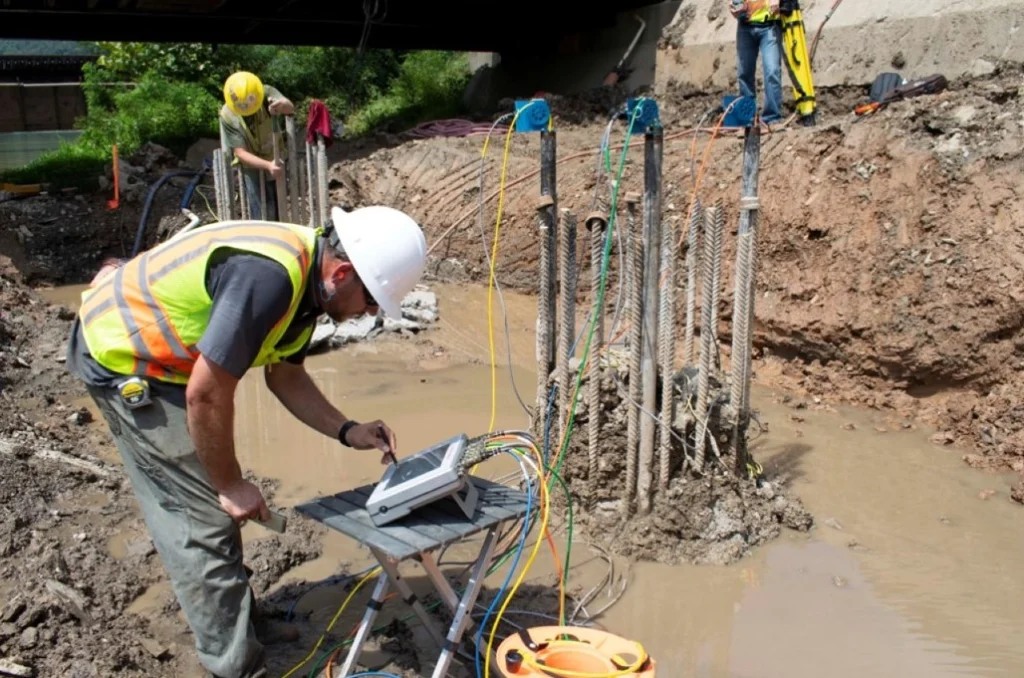
Concrete foundations support the entire structure above them, making quality testing an essential part of construction projects. A Crosshole Sonic Logging Test allows engineers to assess the integrity of drilled shafts, bored piles, and deep foundations without destructive methods. By analyzing the internal condition of concrete, this test identifies defects such as voids, honeycombing, and inclusions, preventing potential structural issues before they arise.
Construction projects face numerous challenges, from soil variability to material inconsistencies. A failed foundation can compromise safety, lead to expensive repairs, or even halt the project. Conducting a Crosshole Sonic Logging Test ensures that the foundation meets required standards and provides a reliable base for the structure.
What is Crosshole Sonic Logging Test?
A Crosshole Sonic Logging Test is a non-destructive testing method that evaluates the quality of concrete in drilled shafts or deep foundations. During the test, access tubes are embedded in the concrete, allowing a probe to send and receive ultrasonic waves. These waves pass through the concrete, and their travel time is measured to detect internal anomalies.
Defects such as voids, gaps, or poorly consolidated concrete alter the wave’s velocity, producing identifiable signals. Engineers analyze these signals to determine the uniformity and strength of the concrete. Unlike visual inspection or core sampling, the Crosshole Sonic Logging Test examines the internal structure over the entire height of the pile, offering a more comprehensive assessment.
This test is widely recognized for its accuracy and compliance with international standards, including ASTM D6760 and AASHTO T 260, making it a trusted method for deep foundation evaluation.
Why Crosshole Sonic Logging Test Matters
Concrete defects can compromise structural performance and safety. A pile with undetected voids or weak spots may lead to settlement, cracking, or even structural failure. The Crosshole Sonic Logging Test identifies these issues early, allowing engineers to take corrective action before construction progresses.
Construction regulations in the Philippines require adherence to standards to ensure structural safety. Using a DPWH-BRS accredited laboratory, such as Inch-On Materials Testing Laboratory, guarantees that CSL testing is performed accurately and according to recognized procedures. This provides clients with confidence that their projects meet regulatory requirements while protecting long-term investment.
Foundations that pass the Crosshole Sonic Logging Test demonstrate uniform concrete quality, ensuring that vertical loads are properly supported. This test is particularly critical for high-rise buildings, bridges, and infrastructure projects, where failure of a single deep foundation element can have serious consequences.
How Inch-On Performs Crosshole Sonic Logging Test
Inch-On Materials Testing Laboratory offers specialized CSL testing services that combine on-site evaluation with laboratory support. Skilled technicians first install access tubes in newly cast concrete piles or drilled shafts. Once the concrete reaches sufficient strength, a probe equipped with ultrasonic sensors is lowered through these tubes.
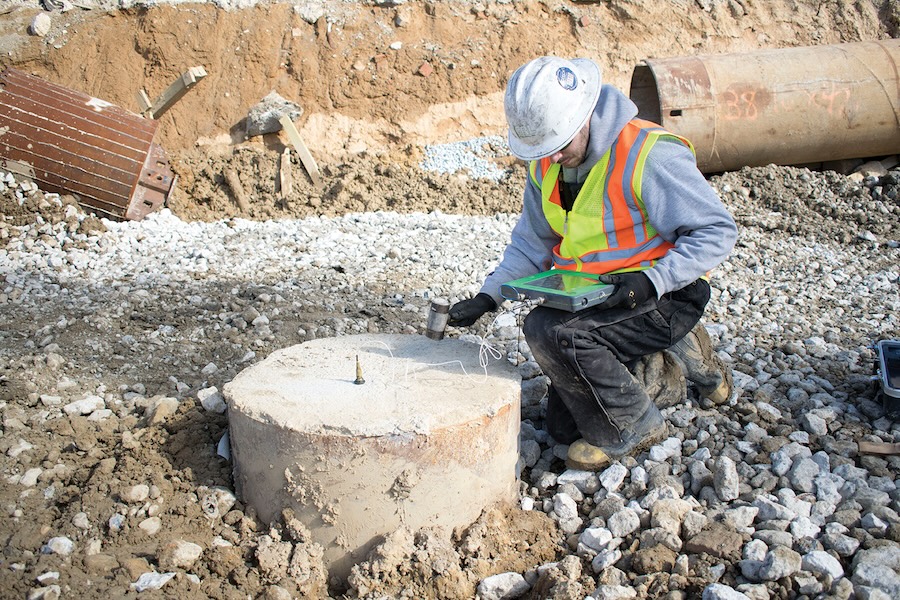
The probe emits sonic pulses that travel through the concrete and are received by sensors in adjacent tubes. Engineers measure the travel time of these pulses to detect inconsistencies in density and identify defects. Results are analyzed to produce a detailed report, highlighting areas of concern and overall quality assessment.
Laboratory support complements field testing by verifying material properties and ensuring results are consistent with construction specifications. Inch-On Materials Testing Laboratory maintains strict compliance with ASTM and AASHTO standards and holds accreditation from DPWH-BRS, ensuring credibility and accuracy in every CSL test.
Benefits of Crosshole Sonic Logging Test
One of the key advantages of the Crosshole Sonic Logging Test is its non-destructive nature. Engineers can examine concrete piles without removing material or compromising structural integrity. This minimizes delays and costs associated with corrective work while providing valuable insight into foundation quality.
The test detects defects that are otherwise invisible, such as internal voids, honeycombing, or gaps around access tubes. Early identification allows timely remediation, preventing structural issues from escalating. Foundations that pass the Crosshole Sonic Logging Test provide assurance of long-term performance, safety, and compliance with construction standards.
Another benefit is the test’s comprehensive coverage. By examining the entire length of a pile, engineers gain a full picture of concrete uniformity and pile integrity. This level of detail is crucial for projects where heavy loads, environmental conditions, or complex design factors increase the risk of structural issues.
Field Testing Services Related to CSL
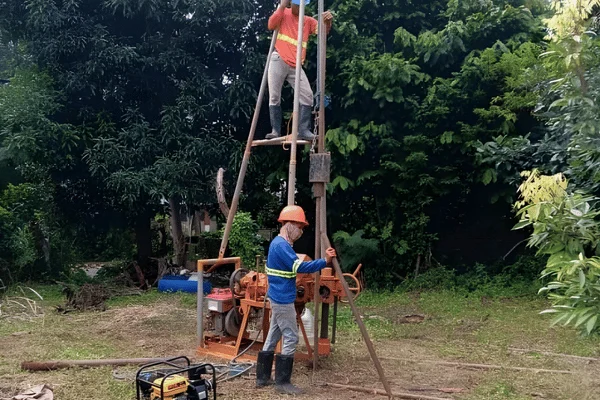
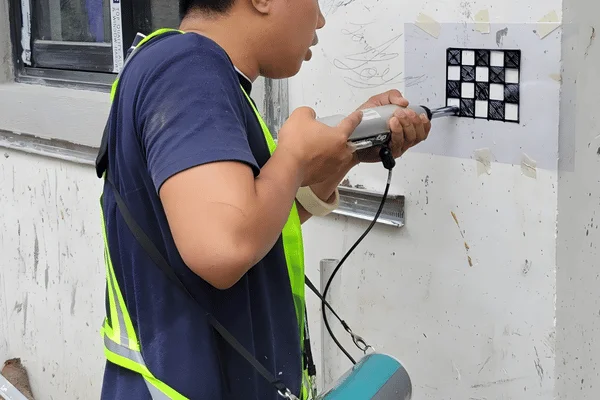
Field testing complements the Crosshole Sonic Logging Test by assessing soil conditions, material strength, and foundation performance directly on-site. Inch-On Materials Testing Laboratory performs in-situ evaluations to ensure that concrete, piles, and soil meet project specifications.
Tests are conducted in accordance with international standards, providing reliable data for engineers. On-site testing helps detect irregularities in real-time, allowing adjustments during construction. These services, combined with CSL testing, create a robust quality assurance system for deep foundation projects.
Laboratory Testing and Material Verification
Laboratory testing reinforces CSL results by evaluating construction materials under controlled conditions. Soil samples, concrete, and other materials undergo precise analysis using advanced equipment. Standardized procedures verify compliance with project specifications and industry standards, ensuring the overall quality of foundations.
Laboratory results support the Crosshole Sonic Logging Test by confirming material properties, providing engineers with data to interpret field findings accurately. This combination of field and laboratory testing creates a comprehensive approach to foundation evaluation, reducing risk and improving project outcomes.
Common Applications of Crosshole Sonic Logging Test
The Crosshole Sonic Logging Test is essential for various construction scenarios, including:
- Drilled shafts and bored piles for high-rise buildings
- Bridge foundations and piers
- Deep foundations for industrial structures
- Marine and infrastructure projects with heavy load requirements
Engineers rely on CSL testing to guarantee that piles are defect-free and capable of supporting intended loads. Projects that require rigorous safety standards or regulatory compliance benefit significantly from this testing method.
Factors Affecting CSL Results
Several factors influence the accuracy of a Crosshole Sonic Logging Test. Proper installation of access tubes is critical, as misaligned tubes can produce misleading readings. Concrete curing conditions, moisture content, and uniformity also impact sonic wave travel time.
Experienced technicians and strict adherence to testing standards help mitigate these issues. Inch-On Materials Testing Laboratory ensures proper setup, calibration of equipment, and expert analysis to deliver reliable results, giving clients confidence in foundation performance.
Why Choose Inch-On Materials Testing Laboratory for CSL
Inch-On Materials Testing Laboratory offers a combination of expertise, accreditation, and advanced technology. With experience in soil and concrete testing, in-situ evaluation, and laboratory analysis, Inch-On provides a complete solution for foundation quality assessment.
Accreditation by DPWH-BRS ensures compliance with local and international standards, while skilled engineers guarantee accurate interpretation of CSL results. Choosing Inch-On means projects benefit from reliable, defect-free foundations that meet safety and regulatory requirements.
Takeaway
The Crosshole Sonic Logging Test is a critical step in ensuring that concrete foundations are free from hidden defects and capable of supporting the structure above. By detecting voids, honeycombing, and other anomalies early, this test prevents costly repairs and enhances structural safety.
Inch-On Materials Testing Laboratory combines field testing, laboratory analysis, and expert evaluation to deliver accurate CSL testing services in the Philippines. Projects that undergo CSL testing gain confidence in foundation integrity, compliance with standards, and long-term durability.
Frequently Asked Questions (FAQ)
What does a Crosshole Sonic Logging Test detect?
It identifies voids, honeycombing, gaps, and poorly consolidated concrete within drilled shafts, bored piles, and deep foundations.
Is CSL testing destructive?
No, the Crosshole Sonic Logging Test is non-destructive. Access tubes are embedded in the concrete, allowing evaluation without damaging the structure.
How long does CSL testing take?
The duration depends on pile size and quantity but typically involves installation of access tubes, curing time, and ultrasonic scanning, often completed within a few days for standard projects.
Does CSL testing comply with international standards?
Yes, the test follows ASTM D6760 and AASHTO T 260, ensuring consistent, accurate results.
Why choose Inch-On for CSL testing?
Inch-On Materials Testing Laboratory is DPWH-BRS accredited, employs advanced equipment, and offers both field and laboratory support, guaranteeing reliable results and compliance with construction standards.