










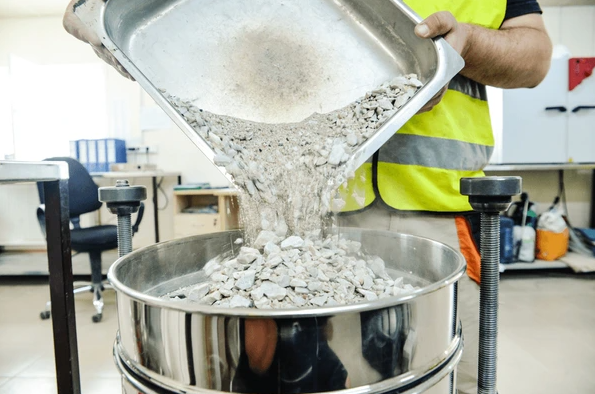
Concrete quality begins with the aggregates used in its mix. The performance, strength, and durability of concrete or asphalt are heavily influenced by the size, composition, and quality of the aggregates. Concrete Aggregates Testing is an essential process that guarantees materials meet strict industry standards and project specifications. Accurate testing protects structures from premature cracking, structural weaknesses, and costly maintenance issues, making it a cornerstone of reliable construction projects. Inch-On Materials Testing Laboratory provides professional Concrete Aggregates Testing services to ensure every project maintains the highest standards of safety and durability.
Concrete Aggregates Testing delivers critical insights into aggregate composition, particle size distribution, and the presence of contaminants that may compromise the integrity of concrete. Testing not only ensures compliance with regulatory standards such as ASTM and AASHTO but also provides contractors, engineers, and project managers with the data needed to design mixes with optimal strength, workability, and longevity. By understanding the properties of aggregates before construction begins, teams can make informed decisions that reduce risk and enhance overall structural performance.
What Are Concrete Aggregates?
Concrete aggregates are granular materials that act as the structural backbone of concrete. They include coarse aggregates such as gravel and crushed stone and fine aggregates like sand. Each type of aggregate contributes to the workability, strength, and durability of concrete. Coarse aggregates provide the framework for concrete and resist compressive forces, while fine aggregates fill voids, improving density and surface finish. The right combination of coarse and fine aggregates ensures a well-compacted, strong, and durable concrete mix.
Using low-quality aggregates can result in weak bonding, reduced compressive strength, and increased susceptibility to cracking and surface defects. Concrete Aggregates Testing identifies aggregate characteristics and measures their suitability for specific applications, preventing costly failures and ensuring long-term stability. Testing aggregates is not optional for projects that demand high performance; it is an essential step for maintaining structural integrity and compliance with engineering standards.
Why Testing Aggregates Matters
Concrete Aggregates Testing is crucial for construction safety and durability. Substandard aggregates can compromise concrete strength, leading to structural failures, reduced service life, and safety hazards. Testing helps detect potential issues before construction begins, allowing teams to correct or replace unsuitable materials. Standards such as ASTM and AASHTO provide strict guidelines for evaluating aggregate size, durability, and composition. Following these protocols ensures consistency, reliability, and international recognition of testing results.
Testing aggregates also helps optimize concrete mixes. By understanding particle size distribution, absorption rates, and specific gravity, engineers can design concrete that balances strength, workability, and cost-efficiency. Projects that invest in comprehensive Concrete Aggregates Testing enjoy improved structural performance and reduced long-term maintenance costs, demonstrating the critical value of precise testing and validation.
Key Aggregate Tests at Inch-On
Concrete Aggregates Testing involves a variety of procedures that assess the physical, chemical, and mechanical properties of aggregates. Inch-On Materials Testing Laboratory provides specialized testing services to cover all aspects of aggregate evaluation, ensuring compliance and reliability.
Particle Size & Gradation
Sieve Analysis (ASTM C136) determines the particle size distribution of aggregates, a critical factor for concrete packing and workability. Proper gradation minimizes voids, increases density, and improves the overall performance of the concrete mix. Poorly graded aggregates can lead to segregation, honeycombing, and reduced structural integrity.
Materials Finer Than 75-µm (ASTM C117) measures fine materials such as silt and clay that can weaken the bond between aggregates and cement paste. Excessive fines reduce workability, hinder hydration, and may cause surface defects. Concrete Aggregates Testing identifies these fines and ensures the aggregate meets acceptable limits for durable concrete performance.
Durability & Strength
Abrasion Loss / Los Angeles Abrasion (ASTM C131) evaluates aggregate hardness and resistance to crushing and wear. Aggregates subjected to abrasion tests provide insight into how they will perform during handling, mixing, and long-term service. Aggregates with high abrasion loss may deteriorate quickly, affecting concrete strength and lifespan.
Soundness (ASTM C88) assesses aggregate resistance to weathering, including repeated cycles of freezing and thawing or wetting and drying. This test is particularly important for projects exposed to harsh climates. Concrete Aggregates Testing ensures aggregates can withstand environmental stress without compromising structural integrity.
Physical Properties & Density
Specific Gravity & Absorption (ASTM C127) measures the volume of aggregates and their water absorption rate, which is essential for calculating mix proportions and water-cement ratios. Concrete performance depends on the accurate determination of these properties to avoid mix inconsistencies that can reduce strength or workability.
Unit Weight & Voids (ASTM C29) determines the density of aggregates and the percentage of voids between particles. Proper understanding of aggregate voids allows for precise batching, improving concrete quality and yield. Concrete Aggregates Testing provides accurate data to support optimal mix designs and resource efficiency.
Detecting Problematic Materials
Clay Lumps & Friable Particles (ASTM C142) identifies weak or contaminating materials that can compromise concrete durability. These materials may break down during mixing, causing surface defects or reduced structural performance. Concrete Aggregates Testing ensures aggregates are free from such deleterious substances, providing confidence in the quality and longevity of the final concrete.
Field vs Laboratory Testing
Concrete Aggregates Testing includes both field and laboratory assessments. Field testing evaluates soil, concrete, and pile foundations directly at the construction site, capturing real-world conditions that may influence structural performance. These tests allow engineers to verify that site materials meet project requirements and provide reliable performance under actual load and environmental conditions.
Laboratory testing provides controlled, precise measurements of soil and aggregate properties. Using state-of-the-art apparatus and standardized procedures, laboratories like Inch-On deliver consistent results that comply with international standards. Laboratory testing complements field assessment, ensuring comprehensive evaluation of materials before construction begins. Concrete Aggregates Testing conducted in both field and lab settings ensures structural integrity, safety, and regulatory compliance.
How Inch-On Ensures Quality
As a DPWH-BRS accredited laboratory, Inch-On Materials Testing Laboratory is recognized for rigorous oversight, accuracy, and compliance. All testing strictly follows ASTM and AASHTO protocols, producing data that is globally accepted and reliable. Concrete Aggregates Testing at Inch-On combines technical expertise, advanced equipment, and methodical procedures to deliver results that engineers, contractors, and project managers can trust.
Professional testing not only identifies potential material issues but also supports better mix design, optimized resource use, and longer-lasting concrete structures. Inch-On experts provide guidance on interpreting test results, helping teams make informed decisions that enhance project outcomes. Concrete Aggregates Testing from Inch-On ensures projects maintain the highest standards of safety, durability, and performance.
Benefits of Professional Aggregate Testing
Concrete Aggregates Testing provides multiple benefits for construction projects. It improves concrete strength, prevents structural failures, ensures compliance with industry standards, and reduces long-term maintenance costs. Testing allows for optimized mix design, better workability, and accurate estimation of material quantities. Projects that rely on precise testing experience fewer defects, increased durability, and enhanced confidence in structural performance. Choosing a professional laboratory like Inch-On ensures that every aspect of aggregate quality is thoroughly evaluated, giving contractors and engineers peace of mind.
Takeaway
Concrete Aggregates Testing is a critical step for achieving strong, durable, and reliable concrete structures. Testing identifies particle size distribution, durability, density, and potential contaminants, helping teams make informed decisions and avoid costly mistakes. Inch-On Materials Testing Laboratory offers professional testing services that follow global standards, combining laboratory precision with field expertise. Trusting expert Concrete Aggregates Testing ensures projects meet stringent quality requirements while providing long-term structural reliability and safety.
FAQ – Concrete Aggregates Testing
What is the purpose of Concrete Aggregates Testing?
Concrete Aggregates Testing evaluates the quality, strength, and suitability of aggregates for concrete production. It ensures compliance with industry standards and supports the creation of durable, high-performance concrete.
Which standards are followed during Concrete Aggregates Testing?
Testing at Inch-On follows ASTM and AASHTO standards, ensuring results are internationally recognized and reliable.
How does particle size affect concrete quality?
Particle size distribution impacts workability, density, and strength. Properly graded aggregates reduce voids, improve packing, and enhance overall concrete performance.
What are common tests performed in Concrete Aggregates Testing?
Key tests include sieve analysis, Los Angeles abrasion, soundness testing, specific gravity and absorption, unit weight and voids, and assessment of clay lumps or friable particles.
Can Concrete Aggregates Testing prevent structural failures?
Yes, testing identifies weak or unsuitable aggregates, allowing engineers to adjust mix designs and avoid concrete defects or structural weaknesses.
Does Inch-On provide both field and laboratory testing?
Yes, Inch-On conducts on-site field evaluations and precise laboratory testing to ensure comprehensive assessment of materials and foundations.