







Strong foundations are critical to the success of any construction project. Whether constructing high-rise buildings, bridges, industrial facilities, ports, or public infrastructure, the stability of the entire structure depends heavily on the performance of its foundation system. Piles are often selected to transfer structural loads safely into deeper and stronger soil layers. Because these elements remain hidden below ground after installation, proper verification is necessary to confirm their quality and performance.
A Pile Integrity and Pile Dynamic Test provides engineers, contractors, and project owners with valuable information regarding the condition and capacity of foundation piles. These testing methods help identify defects, verify construction quality, and evaluate load-bearing performance before problems become costly structural concerns.
As a DPWH-BRS accredited engineering and construction laboratory, Inch-On Materials Testing Laboratory delivers reliable testing services for foundation systems, soil, concrete, and construction materials. Through internationally recognized ASTM and AASHTO testing standards, the laboratory supports safe and dependable construction practices across various industries.
Understanding Pile Foundations and Their Importance
Pile foundations are deep foundation elements designed to transfer loads from structures into stronger soil or rock strata beneath the surface. They are commonly used when shallow foundations cannot provide sufficient support due to weak soil conditions or heavy structural loads.
Many modern projects rely on pile foundations, including commercial towers, residential developments, industrial facilities, transportation infrastructure, marine structures, and government projects. Because piles carry significant loads, even minor defects can affect overall structural performance.
Factors such as poor concrete placement, improper pile installation, soil variability, equipment issues, and construction errors can impact pile quality. Since these problems are often hidden below ground, visual inspections alone cannot provide accurate evaluations.
A Pile Integrity and Pile Dynamic Test helps verify foundation quality by assessing pile condition and performance before structures move into service.
What Is a Pile Integrity and Pile Dynamic Test?
A Pile Integrity and Pile Dynamic Test consists of two specialized foundation testing methods designed to evaluate different aspects of pile performance.
Pile Integrity Testing focuses on identifying physical defects or discontinuities within a pile. This method determines whether the pile remains continuous from top to bottom and detects potential structural flaws.
Pile Dynamic Testing focuses on evaluating the load-bearing capacity and performance of piles during installation. This method provides valuable information regarding pile resistance, driving stresses, and structural behavior.
Together, a Pile Integrity and Pile Dynamic Test provides a more complete understanding of foundation performance. While one verifies structural condition, the other evaluates the pile’s ability to carry design loads safely.
What Is a Pile Integrity Test?
Purpose of Pile Integrity Testing
Pile Integrity Testing is a non-destructive testing method used to evaluate the structural condition of foundation piles. The primary objective is to detect defects that may affect pile performance.
Common defects identified through Pile Integrity Testing include cracks, necking, voids, honeycombing, soil inclusions, and cross-sectional reductions. Early detection allows engineers to assess potential risks before construction progresses further.
Because foundation piles are buried underground, identifying these issues without testing can be extremely difficult. A Pile Integrity and Pile Dynamic Test helps reveal hidden concerns that may otherwise remain unnoticed until structural problems arise.
How the Test Is Conducted
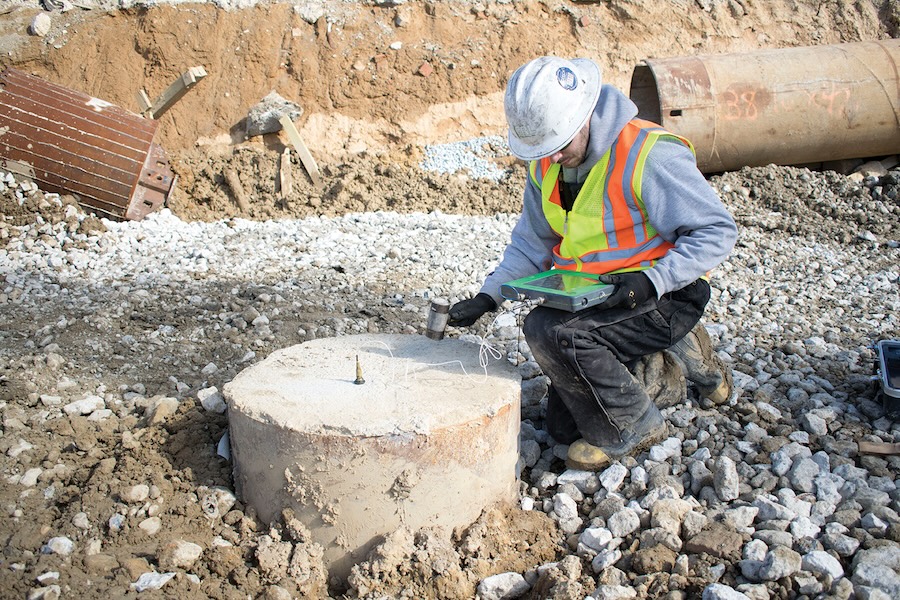
Pile Integrity Testing generally uses a low-strain impact method. A small hammer strike is applied to the pile head while sensors record the resulting wave reflections.
The wave travels through the pile and reflects back whenever it encounters changes in material properties or geometry. Specialized software analyzes these reflections and generates data regarding pile condition.
Testing can typically be completed quickly, making it a practical solution for projects with multiple piles requiring evaluation.
Benefits of Pile Integrity Testing
Pile Integrity Testing offers numerous advantages for construction projects. Since the method is non-destructive, testing does not damage the pile or affect construction schedules.
The process provides rapid results and can evaluate a large number of piles efficiently. Early identification of defects reduces costly corrective work and supports better quality control.
As part of a comprehensive Pile Integrity and Pile Dynamic Test program, integrity testing improves confidence that installed foundations meet project requirements.
What Is a Pile Dynamic Test?
Purpose of Pile Dynamic Testing
Pile Dynamic Testing evaluates the load-bearing capacity and driving performance of foundation piles. This method provides engineers with information regarding pile resistance, structural stresses, and installation quality.
A Pile Dynamic Test helps determine whether the pile can safely support the design loads specified for the project. It also assesses hammer performance and pile driving efficiency.
This information supports engineering decisions while helping maintain safety and compliance throughout construction.
How the Test Works
During a Pile Dynamic Test, sensors are attached near the pile head. These instruments measure force and acceleration generated during pile driving.
Data collected from the sensors is analyzed using advanced wave equation techniques. Engineers can estimate pile capacity, resistance distribution, driving stresses, and other performance characteristics.
Because results are available quickly, project teams can make informed decisions without significant delays.
Benefits of Pile Dynamic Testing
A Pile Dynamic Test provides a practical alternative to extensive static load testing for many projects. The method delivers reliable capacity estimates while reducing time and cost requirements.
Project teams gain valuable information regarding installation quality and foundation performance. This allows construction activities to proceed with greater confidence and efficiency.
When combined with integrity testing, a Pile Integrity and Pile Dynamic Test creates a strong quality assurance program for foundation construction.
Key Differences Between Pile Integrity and Pile Dynamic Test
Although both methods evaluate foundation piles, their objectives differ significantly.
Pile Integrity Testing focuses primarily on structural condition. It identifies defects, discontinuities, and physical abnormalities that may compromise pile performance.
Pile Dynamic Testing focuses on load-bearing capacity and installation performance. It determines whether the pile can support design loads while evaluating driving stresses and resistance.
Testing procedures also differ. Integrity testing uses low-strain impacts, while dynamic testing measures pile behavior during driving activities.
Information obtained from each method complements the other. A Pile Integrity and Pile Dynamic Test program provides a comprehensive evaluation of both pile condition and capacity.
Common Foundation Problems Identified Through Pile Integrity and Pile Dynamic Test
Construction projects face numerous challenges that can affect foundation quality. A Pile Integrity and Pile Dynamic Test helps identify these issues before they create serious structural concerns.
Cracks and fractures may develop during installation or concrete curing. These defects can weaken pile performance and reduce durability.
Necking occurs when sections of the pile become narrower than intended. This reduction in cross-sectional area can decrease load-bearing capability.
Void formation may result from poor concrete placement or segregation. Such defects create weak points within the pile structure.
Pile Dynamic Testing can identify resistance problems associated with soil conditions. It also helps evaluate whether piles achieve required capacities during installation.
Construction errors, material inconsistencies, and equipment-related issues may also be detected through professional testing programs.
Industries and Projects That Benefit from Pile Integrity and Pile Dynamic Test
Many industries depend on foundation testing to maintain structural safety and project quality.
High-rise buildings require strong foundations capable of supporting substantial vertical loads. A Pile Integrity and Pile Dynamic Test helps verify pile performance before superstructure construction begins.
Commercial developments often involve varying soil conditions that require careful foundation evaluation.
Industrial facilities rely on heavy equipment and machinery that place significant demands on foundation systems.
Bridge and flyover projects require dependable pile performance due to dynamic traffic loads and environmental conditions.
Ports and marine structures face additional challenges from water exposure, corrosion, and complex soil conditions.
Government infrastructure projects also benefit from foundation testing to support public safety and long-term serviceability.
Why Choose Inch-On Materials Testing Laboratory for Pile Integrity and Pile Dynamic Test Services
DPWH-BRS Accredited Laboratory
Inch-On Materials Testing Laboratory is a DPWH-BRS accredited engineering and construction laboratory committed to providing reliable testing services. Accreditation demonstrates compliance with recognized quality and technical requirements.
ASTM and AASHTO-Based Testing Procedures
The laboratory follows ASTM and AASHTO testing standards to ensure accurate and dependable results. These internationally recognized procedures support consistency and reliability across projects.
Advanced Testing Equipment
Inch-On employs specialized equipment designed for soil testing, construction material evaluation, concrete assessment, and foundation pile testing. Modern technology supports accurate data collection and analysis.
Experienced Technical Team
Qualified professionals conduct testing activities and interpret results with precision. Their technical knowledge helps project teams understand foundation performance and identify potential concerns.
Comprehensive Construction Testing Solutions
Beyond a Pile Integrity and Pile Dynamic Test, Inch-On provides a broad range of engineering and construction testing services. These include soil testing, concrete testing, material verification, and in-situ assessments that support project quality and structural integrity.
Best Practices Before Conducting a Pile Integrity and Pile Dynamic Test
Successful testing begins with proper planning and coordination. Project teams should identify testing requirements early to avoid scheduling conflicts and delays.
Accurate project documentation should be available before testing activities begin. Design information, pile installation records, and construction details help support meaningful analysis.
Site accessibility should also be considered to ensure testing equipment can operate efficiently.
Qualified testing personnel should perform all procedures using calibrated instruments and established standards.
Following these best practices helps maximize the value of a Pile Integrity and Pile Dynamic Test while supporting reliable project outcomes.
Building Stronger Foundations Through Pile Integrity and Pile Dynamic Test
Foundation quality plays a direct role in structural safety, durability, and long-term performance. Hidden defects or insufficient capacity can create serious challenges if left undetected.
A Pile Integrity and Pile Dynamic Test provides valuable information that helps engineers verify pile condition and load-bearing capability. These testing methods work together to strengthen quality assurance efforts throughout construction.
By partnering with a trusted and accredited laboratory such as Inch-On Materials Testing Laboratory, project owners and contractors gain access to reliable testing services backed by recognized standards, technical expertise, and a commitment to construction excellence.
Frequently Asked Questions About Pile Integrity and Pile Dynamic Test
What is the purpose of a Pile Integrity and Pile Dynamic Test?
A Pile Integrity and Pile Dynamic Test evaluates both the structural condition and load-bearing performance of foundation piles. The testing process helps identify defects, verify installation quality, and confirm design requirements.
What defects can a Pile Integrity Test detect?
Pile Integrity Testing can detect cracks, necking, voids, honeycombing, inclusions, and other discontinuities that may affect pile performance.
Is a Pile Integrity Test a non-destructive testing method?
Yes. Pile Integrity Testing is considered a non-destructive method because it does not damage the pile during evaluation.
How accurate is a Pile Dynamic Test?
A Pile Dynamic Test provides reliable estimates of pile capacity and installation performance when conducted by qualified professionals using appropriate equipment and analysis methods.
When should pile testing be performed during construction?
Testing is commonly performed after pile installation and during construction phases where foundation verification is required.
Can Pile Integrity and Pile Dynamic Test be performed on the same project?
Yes. Many projects perform both testing methods because they provide complementary information regarding pile condition and capacity.
Why should construction companies hire a DPWH-BRS accredited testing laboratory?
Accredited laboratories follow recognized standards and quality procedures, providing dependable results that support engineering decisions and regulatory compliance.
Why choose Inch-On Materials Testing Laboratory for foundation pile testing?
Inch-On Materials Testing Laboratory offers DPWH-BRS accredited testing services, ASTM and AASHTO-based procedures, specialized testing equipment, experienced technical professionals, and comprehensive construction testing solutions that help ensure project quality and structural reliability.