





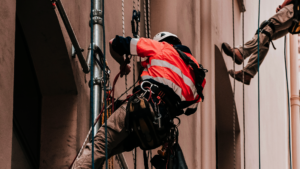
Work at height demands dependable safety equipment, careful planning, and strict site procedures. Roof maintenance, facade cleaning, tower servicing, structural inspection, and construction work can expose crews to serious fall risks. A properly selected anchorage system gives workers a secure connection point for harnesses, lanyards, lifelines, and self-retracting devices.
Quality anchor point equipment in Indonesia helps contractors, building owners, facility managers, and industrial companies protect workers across demanding job sites. Each anchor must match the supporting structure, work activity, movement area, user count, and fall protection method. Choosing a random attachment location can place workers at greater risk, even when they wear certified personal protective equipment.
GROXX GEARS supplies heavy-duty industrial safety solutions created for challenging construction and maintenance conditions. Its product range supports roofing work, facade access, vertical climbing, suspended access, and other tasks where reliable fall protection remains essential. Through sound engineering, strong materials, and accurate production, GROXX GEARS helps businesses build safer work-at-height systems.
What Is Anchor Point Equipment?
Anchor point equipment provides a secure attachment location for a worker’s fall protection system. A worker may connect a lanyard, self-retracting lifeline, rope line, horizontal lifeline, or vertical lifeline to the anchorage. Should a fall occur, the system helps stop the worker before contact with the ground, machinery, or a lower platform.
An anchor point may also support fall restraint. A restraint arrangement limits how far a worker can travel, preventing access to an exposed edge. This approach can reduce the chance of a fall when site conditions allow proper positioning.
Different forms of anchor point equipment in Indonesia serve different structures and tasks. Some products remain permanently fixed to roofs, concrete slabs, steel beams, towers, or building facades. Others offer temporary attachment for short-term construction, installation, repair, or inspection work.
Anchor points form only one part of a complete system. Safe use also requires a suitable full-body harness, compatible connectors, energy-absorbing devices, correct clearance, worker training, supervision, and a rescue procedure.
Why Anchor Point Equipment Matters for Indonesian Worksites
Construction and maintenance teams regularly work across rooftops, ladders, scaffolds, towers, warehouses, factories, high-rise buildings, and industrial plants. These environments may contain open edges, fragile roofing, slippery surfaces, limited access routes, and machinery below the work zone.
Purpose-built anchor point equipment in Indonesia provides workers with a tested connection location rather than forcing them to depend on pipes, railings, frames, or structural parts that were never designed for fall protection. An unsuitable attachment may bend, break, detach, or create dangerous connector loading during a fall.
Local weather conditions can also affect product performance. Heat, heavy rainfall, humidity, coastal air, dust, and chemical exposure may accelerate corrosion or material wear. Anchor equipment should use materials and protective finishes suited to the installation environment.
Reliable anchorage supports safer work practices while helping companies reduce delays caused by damaged equipment, unsafe access, or repeated setup changes. Permanent systems may also make recurring maintenance work more practical by giving crews clearly identified attachment locations.
Common Types of Anchor Point Equipment in Indonesia
Several anchorage options are available for roofing, construction, maintenance, and industrial applications. Product selection should follow a site assessment rather than a one-size-fits-all approach.
Permanent roof anchors remain attached to a building for repeated access. They may support roof inspections, drainage cleaning, solar panel servicing, equipment repair, and facade maintenance. Correct installation depends on roof construction, structural support, mounting method, and intended fall protection arrangement.
Temporary anchors suit short-term work where permanent installation may not be practical. These products can support crews moving between projects, provided each anchor matches the structure and remains installed according to product instructions.
Concrete anchors connect to suitable concrete surfaces through approved mechanical or chemical fixing methods. Concrete strength, edge distance, drilling depth, fixing condition, and load direction must be reviewed before installation.
Steel anchors may attach to beams, columns, roof frames, towers, or industrial structures. Some remain fixed, while beam clamps and mobile anchors may allow movement along a structural member. The steel profile, flange dimensions, surface condition, and connection method must match the product.
Horizontal lifeline systems use end anchors and, where required, intermediate supports to protect workers travelling across long roof areas or elevated platforms. Vertical lifeline systems support ladder, tower, shaft, and climbing access.
GROXX GEARS can help companies review suitable anchor point equipment in Indonesia for fixed access routes, wide work zones, vertical movement, and recurring building maintenance tasks.
Permanent Anchor Points for Recurring Maintenance
Buildings that require regular roof or facade access may benefit from permanently installed anchor points. These systems can give maintenance teams designated connection locations for cleaning, inspection, repairs, and equipment servicing.
Permanent anchor point equipment in Indonesia may suit commercial buildings, factories, warehouses, hotels, hospitals, offices, and high-rise properties. The layout should reflect the actual work area rather than simply placing anchors at convenient installation spots.
Anchor positioning affects worker movement, fall clearance, and swing-fall exposure. An anchor placed far from the work zone may cause the lifeline or lanyard to run across sharp edges. Poor positioning can also create a pendulum effect during a fall, causing the worker to swing toward a wall or structural element.
A planned roof safety layout may combine fixed anchors with lifelines, access hatches, walkways, guardrails, and controlled work zones. Early coordination between building designers, engineers, safety teams, and maintenance personnel can support a more practical access arrangement.
Temporary Anchors for Construction and Short-Term Tasks
Temporary anchor points provide flexibility for crews working across changing project locations. Construction teams, installers, inspectors, and repair specialists may need equipment that can be fitted, checked, removed, and transferred between approved structures.
Temporary systems may include beam anchors, webbing anchors, concrete attachments, doorway anchors, tripod systems, and portable deadweight units. Each type has specific structural and setup requirements.
Workers should never assume that portable equipment can connect to every available surface. Supporting structures must remain suitable for the expected forces. The anchor also needs correct positioning to reduce free-fall distance and swing risk.
Pre-use inspection remains essential. Workers should check for deformation, corrosion, cuts, missing parts, damaged threads, loose fasteners, and unreadable labels. Any questionable item should be removed from service until assessed by a qualified person.
Companies sourcing anchor point equipment in Indonesia for temporary work should consider portability, storage, user capacity, structural compatibility, setup time, and inspection requirements.
Fall Restraint and Fall Arrest Applications
Fall restraint and fall arrest serve different safety purposes. Fall restraint limits a worker’s travel so that the person cannot reach an open edge. Fall arrest allows access to a fall-risk area but stops the worker after a fall begins.
A restraint setup may use a fixed-length lanyard connected to an anchor positioned away from the edge. Correct adjustment prevents the worker from entering the fall zone. This method may reduce the need for fall clearance because no fall should occur during proper use.
Fall arrest requires additional planning. The system must account for lanyard length, deceleration distance, harness stretch, worker height, anchor position, and a safety margin. Objects, equipment, platforms, or lower levels beneath the worker must also be considered.
Anchor location plays a major role. A higher connection point may reduce free-fall distance, while a low connection may increase fall forces and required clearance. Equipment must remain approved for the chosen connection orientation.
Suitable anchor point equipment in Indonesia should always match the planned method. Equipment intended only for restraint must not be treated as a fall arrest anchor unless its design and rating support that application.
Choosing Anchor Point Equipment for the Supporting Structure
Structural compatibility represents one of the most important selection factors. Concrete, structural steel, timber, metal roofing, and composite roofing all require different attachment methods.
For concrete installations, the installer should review concrete condition, thickness, strength, reinforcement location, edge distance, and fixing method. Cracked, damaged, or deteriorated concrete may require engineering review before any anchor installation.
Steel structures require careful measurement and connection planning. Beam anchors must fit the flange dimensions and remain protected from accidental release. Fixed steel anchors may require approved bolting or welding procedures completed by competent personnel.
Roof anchors must connect to a suitable structural member rather than only to a thin roofing sheet. Roofing material alone may not resist fall arrest forces unless the complete product has been specifically designed and tested for that roof system.
GROXX GEARS focuses on heavy-duty engineering and controlled manufacturing for demanding industrial applications. Businesses selecting anchor point equipment in Indonesia should request products that match both the base structure and intended safety function.
Worker Movement and Lifeline Systems
A single fixed anchor may suit a small work area, but wider roofs and long platforms often require greater movement. Workers who frequently disconnect and reconnect may face periods without protection or may connect to unsuitable points.
Horizontal lifelines allow travel along a defined path while maintaining a continuous connection. These systems may use flexible cables or rigid rails, depending on the building layout and work requirements.
System design should account for line length, worker count, end loads, intermediate supports, cable deflection, fall clearance, and rescue access. Adding another worker can change the forces placed on the system, so user capacity must remain clearly stated.
Vertical lifelines protect workers climbing ladders, towers, masts, and fixed access routes. A guided device travels with the worker and locks during sudden downward movement.
GROXX GEARS provides fall protection solutions that can support customized access requirements. Properly planned anchor point equipment in Indonesia can work alongside horizontal and vertical lifelines to give crews greater freedom of movement without sacrificing secure attachment.
Environmental Conditions and Material Selection
Outdoor safety equipment faces continuous exposure to weather and airborne contaminants. Coastal locations may create greater corrosion risk because of salt exposure. Industrial sites may contain chemicals, fumes, abrasive dust, or high temperatures.
Stainless steel and protected alloy components may offer suitable resistance for many environments, although material choice should reflect actual site conditions. Dissimilar metals can also react when placed together, causing galvanic corrosion.
Regular cleaning and inspection help detect early signs of deterioration. Rust, pitting, cracking, worn coatings, loose fixings, and distorted components should receive immediate attention.
Drainage conditions around roof anchors also matter. Standing water and trapped debris may speed up corrosion around mounting points. Waterproofing details should prevent leaks while maintaining the anchor’s structural connection.
High-quality anchor point equipment in Indonesia should offer the strength, finish, and durability required for local construction and maintenance environments.
Proper Installation and Documentation
Even a well-made anchor can fail when installed incorrectly. Installation should follow the product instructions, approved design, structural requirements, and site safety plan.
The process usually begins with a survey of work areas, access routes, exposed edges, roof condition, structural supports, and possible rescue locations. The installer can then identify suitable anchor types and positions.
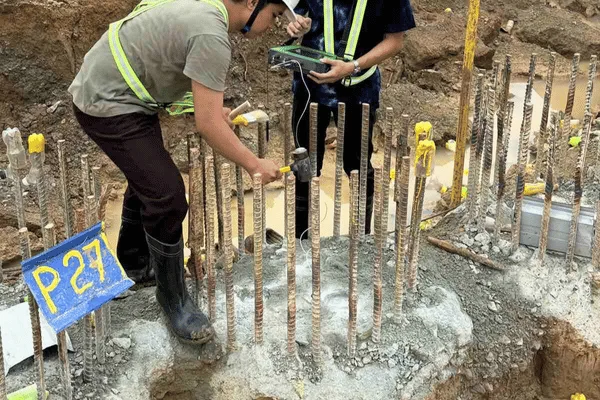
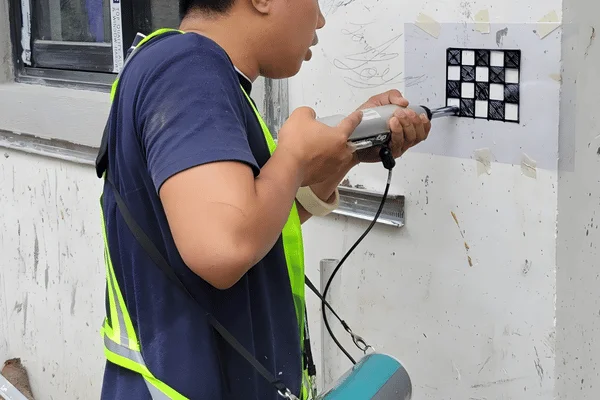
Mounting procedures may include drilling, bolting, clamping, chemical fixing, or approved welding. Correct hole size, embedment depth, fixing torque, spacing, and curing time can affect performance.
Installers should avoid unauthorized component changes. Substituting fasteners, modifying plates, drilling extra holes, or adding unapproved welds may weaken the equipment.
Completed installations should receive identification labels and inspection records. Documentation may include product details, installation dates, locations, photographs, structural information, test records, and future inspection dates.
Businesses purchasing anchor point equipment in Indonesia should consider installation support and documentation as part of the total safety solution rather than treating the product as an isolated item.
Inspection and Maintenance of Anchor Points
Pre-use checks help workers identify visible problems before connecting. The user should examine the anchor, fixings, labels, surrounding surface, and compatible equipment.
Signs of concern may include corrosion, cracks, deformation, movement, missing parts, damaged threads, sharp edges, loose bolts, water damage, or changes to the supporting structure. A worker should not connect to an anchor when its condition remains uncertain.
Detailed inspections should occur according to product instructions, site conditions, usage frequency, and company procedures. Coastal or chemical environments may require more frequent checks than protected indoor locations.
Records allow safety managers to track each anchor’s condition, inspection history, repairs, and status. Clearly marking anchors can also help teams identify approved connection locations.
Any anchor point equipment in Indonesia exposed to a fall event should be isolated immediately. Connected components should also be removed from use until professionally assessed. Reuse without inspection may expose another worker to hidden damage.
Anchor Points for High-Rise Building Maintenance
High-rise buildings require planned access for window cleaning, facade repair, glass replacement, sealant work, painting, and structural inspection. Standard scaffolding may not suit every building shape or maintenance task.
Building Maintenance Units, suspended platforms, rope access systems, and roof-based access equipment may depend on properly designed anchorage. The anchor layout should support safe setup, worker movement, equipment positioning, and emergency recovery.
GROXX GEARS offers building maintenance solutions for complex facades and elevated structures. Its suspended access capabilities can support work where crews need controlled access beyond conventional platforms.
Selecting anchor point equipment in Indonesia for high-rise buildings should involve structural review, access planning, operating procedures, worker competency, and rescue preparation. Equipment should reflect recurring maintenance needs throughout the building’s service life.
Common Anchor Point Mistakes to Avoid
Connecting to an unverified pipe, railing, duct, or decorative frame remains a common and dangerous mistake. A component may appear strong but still lack the capacity or connection needed for fall protection.
Another problem occurs when several workers connect to equipment approved for only one user. Multiple users can place far greater forces on the anchor or lifeline.
Ignoring fall clearance can also lead to serious injury. A fall arrest system may stop a worker, but insufficient space below can still allow contact with a lower surface.
Poor anchor positioning may create swing-fall risk. Connecting far to one side of the work area can cause the worker to swing across the facade or strike structural components.
Other mistakes include mixing incompatible connectors, skipping inspections, using damaged equipment, altering components, and working without a rescue plan.
Correct selection and use of anchor point equipment in Indonesia helps reduce these risks while supporting safer daily operations.
Why Choose GROXX GEARS?
GROXX GEARS supplies industrial products built for demanding construction, maintenance, and safety applications. The company focuses on durable materials, accurate manufacturing, and equipment that can perform under heavy working conditions.
Its fall protection offerings support roof access, horizontal movement, vertical climbing, facade work, and complex building maintenance activities. Businesses can also source related rigging gear, fasteners, suspended access products, and industrial hardware.
No two structures have exactly the same access requirements. Roof shape, building height, structural materials, maintenance frequency, and worker movement can affect system selection. GROXX GEARS supports solutions based on the actual site rather than relying on a generic setup.
Companies seeking dependable anchor point equipment in Indonesia can work with GROXX GEARS to identify suitable anchorage, lifeline, and access equipment for their projects.
Building a Complete Work-at-Height Safety System
Safe work at height requires more than purchasing an anchor. The complete arrangement should include suitable harnesses, connectors, lanyards, lifelines, self-retracting devices, access equipment, training, supervision, inspection, and rescue preparation.
Workers must understand where they may connect, how to inspect their gear, how to maintain continuous protection, and what to do when equipment becomes damaged. Supervisors should verify that each task follows the approved work method.
Rescue planning deserves special attention. A worker left suspended after a fall may face serious health risks. Rescue equipment, trained personnel, communication methods, and access routes should remain ready before work begins.
By combining quality anchor point equipment in Indonesia with proper planning and trained crews, businesses can create safer conditions for construction, maintenance, inspection, and repair work.
Frequently Asked Questions About Anchor Point Equipment in Indonesia
What is anchor point equipment used for?
Anchor point equipment provides a secure attachment location for fall restraint, fall arrest, work positioning, lifeline, or rescue systems. Workers connect compatible equipment such as lanyards or self-retracting lifelines to the anchor.
Can one anchor point support several workers?
Only when the product and supporting structure are designed and approved for multiple users. A single-user anchor should never carry several workers.
What is the difference between permanent and temporary anchors?
Permanent anchors remain fixed for recurring access, while temporary anchors can be installed and removed for short-term work. Both require structural compatibility, inspection, and correct installation.
Where can roof anchors be installed?
Roof anchors may connect to suitable concrete, steel, timber, or engineered roof support systems. The roofing sheet alone may not provide sufficient support unless the product has been designed for that specific roof type.
How often should anchor points be inspected?
Workers should complete a visual check before each use. Detailed inspection frequency depends on product instructions, usage, environmental exposure, and site procedures.
Can anchor points connect to horizontal lifelines?
Yes, provided the anchors form part of an engineered horizontal lifeline system. End anchors and intermediate supports must match system forces, worker capacity, and line configuration.
What should happen after an anchor stops a fall?
The anchor and connected equipment should be removed from service immediately. A qualified person should assess all affected components and the supporting structure before any reuse.
Does anchor placement affect safety?
Yes. Placement affects worker movement, free-fall distance, swing risk, fall clearance, and connector loading. Careful layout planning remains essential.
Does GROXX GEARS support high-rise maintenance projects?
GROXX GEARS provides fall protection and building maintenance solutions suited to facade access, suspended work, roof maintenance, inspection, and high-rise servicing.
How can businesses choose anchor point equipment in Indonesia?
Start with a site assessment covering the structure, task, user count, movement area, environmental exposure, fall clearance, compatible personal protective equipment, and rescue plan. GROXX GEARS can support product selection for construction, industrial, and building maintenance applications.