










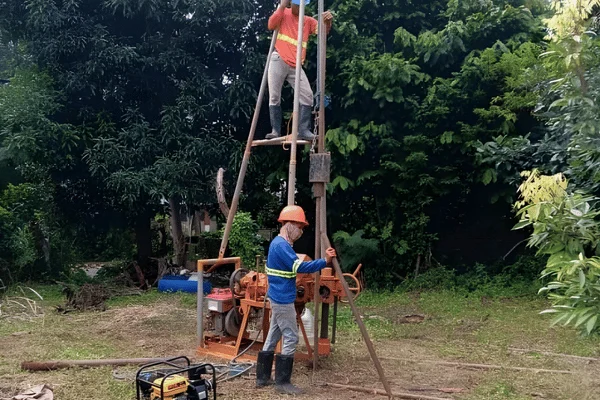
Soil conditions determine structural safety for every construction project, from small residential buildings to large infrastructure works. Foundation performance depends on how soil behaves under load, especially across areas with varying ground profiles and seismic activity. Without proper subsurface evaluation, structures face risks such as uneven settlement, tilting, cracking, and long-term instability.
A Standard Penetration Test plays a central role in geotechnical evaluation by measuring soil resistance at different depths. This field method provides engineers with essential data for foundation design, site assessment, and construction planning. Reliable results from a Standard Penetration Test support safer engineering decisions and more efficient structural design.
In the Philippine construction environment, where soil conditions can change significantly from one location to another, the Standard Penetration Test remains one of the most widely applied field procedures for determining soil strength and consistency before construction begins.
What Is a Standard Penetration Test (SPT)?
A Standard Penetration Test is a field testing procedure used during geotechnical soil investigation to evaluate soil density and strength. The test measures resistance of soil layers by driving a split-spoon sampler into the ground using a controlled hammer system.
The result of a Standard Penetration Test is expressed through the N-value, which represents the number of hammer blows required to penetrate a specific depth of soil. Higher N-values indicate denser and stronger soil, while lower values indicate softer or weaker ground conditions.
Engineers rely on the Standard Penetration Test to understand subsurface conditions that cannot be visually observed. The data gathered supports foundation design decisions and helps determine whether soil conditions can safely support planned structures.
How the Standard Penetration Test Is Performed
A Standard Penetration Test follows a structured field procedure conducted during borehole drilling activities. The process begins with drilling a borehole at the designated testing location to reach target depths where soil evaluation is required.
A split-spoon sampler is then lowered into the borehole. A standardized hammer is used to drive the sampler into the soil at controlled intervals. The number of hammer blows required for each penetration segment is recorded carefully. This measurement becomes the basis for determining the N-value of the Standard Penetration Test.
Soil samples collected during the process are retrieved for visual examination and classification. These samples help identify soil type, texture, moisture condition, and layering sequence. Field technicians document every stage of the Standard Penetration Test to ensure accuracy and consistency of results.
Each depth interval provides unique information about subsurface conditions, allowing engineers to map soil variation across the entire borehole profile.
What Standard Penetration Test Results Tell Engineers
Results from a Standard Penetration Test provide critical insight into soil behavior under load. One of the primary outputs, the N-value, helps engineers classify soil density ranging from very loose to very dense conditions.
A high N-value from a Standard Penetration Test often indicates strong and compact soil layers suitable for structural foundations. Lower values suggest weaker soil that may require ground improvement or specialized foundation systems.
The Standard Penetration Test also helps identify transitions between different soil layers. These transitions are important when designing foundations because changes in soil strength can affect load distribution and settlement behavior.
Another important use of the Standard Penetration Test is identifying zones that may be prone to liquefaction during seismic activity. This is especially relevant for areas with sandy soils and high groundwater levels.
Overall, results from the Standard Penetration Test provide engineers with a clearer understanding of how soil will perform under structural loads.
Importance of Standard Penetration Test in Philippine Construction Projects
The Philippine construction industry faces unique geotechnical challenges due to varying soil conditions, coastal deposits, volcanic soil formations, and seismic exposure. These conditions make the Standard Penetration Test a critical requirement for safe foundation design.
Many areas contain soft clay, loose sand, or mixed soil layers that may not be stable enough for direct construction without proper evaluation. The Standard Penetration Test helps identify these conditions early, reducing the risk of structural failure.
Earthquake activity across the country increases the importance of soil behavior analysis. The Standard Penetration Test provides data that supports seismic design considerations, especially for liquefaction assessment and ground stability evaluation.
Residential buildings, commercial developments, bridges, roads, and industrial facilities all benefit from accurate soil data generated by a Standard Penetration Test. Proper geotechnical investigation helps prevent costly construction errors and long-term structural issues.
Standards and Compliance Requirements
A Standard Penetration Test must follow established international testing procedures to ensure reliable results. Common standards include ASTM and AASHTO guidelines, which define testing methods, equipment specifications, and reporting procedures.
Construction projects in the Philippines often require compliance with DPWH-BRS regulations. A Standard Penetration Test conducted under accredited procedures supports permitting requirements and engineering approvals from local authorities.
Accurate documentation of the Standard Penetration Test is essential for design validation. Engineering consultants depend on standardized results to prepare foundation designs, structural calculations, and safety assessments.
Accredited laboratories play a key role in maintaining testing accuracy and compliance with national construction standards.
Common Engineering Applications of Standard Penetration Test Data
Data from a Standard Penetration Test supports a wide range of engineering and construction applications. One of the most common uses is foundation design, where soil strength determines whether shallow or deep foundations are appropriate.
A Standard Penetration Test also supports pile foundation design by helping estimate pile capacity and driving resistance. This is especially important for structures built on weak or compressible soil layers.
Road and bridge construction projects depend on Standard Penetration Test results to evaluate subgrade strength and soil stability along alignment routes. Earthworks and embankment projects also rely on SPT data for compaction planning and slope stability assessment.
Seismic design studies often include Standard Penetration Test data to evaluate liquefaction risk in saturated sandy soils. This improves structural resilience during earthquake events.
Limitations of the Standard Penetration Test
A Standard Penetration Test provides valuable information, but it also has certain limitations that engineers must consider. One limitation is variability caused by field conditions and operator technique. Differences in hammer energy or sampling consistency may affect results.
Groundwater presence can also influence the outcome of a Standard Penetration Test, especially in loose or saturated soils. These conditions may reduce accuracy in certain soil types.
Another limitation is that the Standard Penetration Test produces disturbed samples, which means laboratory testing is still required for more precise soil classification and analysis.
Engineers often combine Standard Penetration Test results with other geotechnical methods such as cone penetration testing and laboratory soil testing to obtain a more complete understanding of subsurface conditions.
Why Choose Inch-On Materials Testing Laboratory
Inch-On Materials Testing Laboratory is a DPWH-BRS accredited engineering and construction testing laboratory established in November 2018. The laboratory provides independent testing services focused on soil and construction material quality evaluation.
The company conducts Standard Penetration Test services as part of comprehensive geotechnical soil investigation programs. Field operations follow ASTM and AASHTO standards to ensure accurate and reliable results for engineering applications.
Inch-On Materials Testing Laboratory performs both field and laboratory testing services. Field services include soil investigation, concrete testing, and pile foundation evaluation. Laboratory services include soil classification and material quality assessment for construction compliance and design support.
Accreditation from the Department of Public Works and Highways – Bureau of Research and Standards confirms the laboratory’s capability to meet national testing requirements for construction safety and quality assurance.
Field Testing and Laboratory Services Overview
Field testing services include on-site evaluation of soil conditions using Standard Penetration Test procedures. Borehole drilling and sampling activities support direct assessment of subsurface layers at project locations.
Field testing also includes evaluation of concrete strength and pile foundation performance. These services support real-time construction quality control and foundation verification.
Laboratory testing services focus on controlled analysis of soil and construction materials. These tests provide classification data, strength properties, and quality verification results required for engineering design and compliance documentation.
Together, field and laboratory services create a complete geotechnical evaluation system that supports safe and efficient construction planning.
Benefits of Accurate Soil Investigation Before Construction
Accurate soil investigation using Standard Penetration Test methods helps reduce structural risks and improves foundation design decisions. Reliable soil data allows engineers to match foundation systems with actual ground conditions.
Proper geotechnical evaluation helps avoid unnecessary construction costs caused by overdesign or repairs caused by underdesign. It also improves long-term durability of buildings and infrastructure by ensuring that foundations match soil capacity.
Early detection of weak soil layers, liquefaction zones, and variable ground conditions reduces the likelihood of construction delays and structural issues during and after project completion.
Standard Penetration Test results provide a strong technical foundation for safe and efficient construction planning.
Reliable Ground Assessment for Structural Safety
A Standard Penetration Test remains one of the most important tools in geotechnical soil investigation for construction projects across the Philippines. It provides essential data that supports foundation design, structural safety, and compliance with engineering standards.
Reliable soil evaluation helps ensure that structures are built on stable ground conditions capable of supporting long-term loads. Professional testing services play a critical role in delivering accurate subsurface information for safe construction practices.
Inch-On Materials Testing Laboratory delivers Standard Penetration Test services supported by accredited procedures and industry standards, helping engineers and developers achieve dependable foundation performance for every project.
Frequently Asked Questions (FAQ)
What is a Standard Penetration Test used for?
A Standard Penetration Test measures soil resistance and density to support foundation design and geotechnical evaluation for construction projects.
Why is the Standard Penetration Test important in construction?
The Standard Penetration Test helps identify soil strength and weak layers, reducing risks of settlement and structural failure.
What does the N-value in a Standard Penetration Test mean?
The N-value represents the number of hammer blows required to penetrate soil, indicating relative soil density and strength.
Is a Standard Penetration Test required for building permits?
Many construction projects require soil investigation reports that include Standard Penetration Test results to comply with DPWH-BRS and local regulations.
Can Standard Penetration Test results predict liquefaction risk?
Standard Penetration Test data is commonly used to evaluate liquefaction potential in sandy and saturated soil conditions during seismic analysis.
How deep is a Standard Penetration Test performed?
Depth varies depending on project requirements, typically extending until suitable bearing strata or design depth is reached.
Does a Standard Penetration Test replace laboratory testing?
No. A Standard Penetration Test works together with laboratory testing to provide complete soil classification and engineering analysis.