







Concrete structures form the backbone of construction projects, supporting buildings, bridges, and infrastructure across the Philippines. Ensuring these structures maintain their strength and safety is essential. Rebound Hammer Test offers a reliable, non-destructive method to evaluate concrete strength without causing damage. This method allows engineers, project managers, and quality control teams to assess surface hardness and estimate compressive strength efficiently.
Rebound Hammer Test has become a critical tool in the construction and engineering industry because it provides immediate insights into concrete quality while minimizing downtime and repair costs. By measuring the rebound of a spring-driven steel hammer against the concrete surface, this testing method generates valuable data that can guide maintenance, rehabilitation, and quality assurance processes. Inch-On Materials Testing Laboratory, a DPWH-BRS accredited facility, provides Rebound Hammer Test services throughout the Philippines, ensuring accurate evaluation of concrete structures in compliance with ASTM C805 standards and recognized international protocols.
What is a Rebound Hammer Test?
Rebound Hammer Test, also known as Schmidt Hammer testing, is a non-destructive testing method used to assess the surface hardness of hardened concrete. The test works by applying a controlled impact to the concrete surface with a spring-loaded steel hammer and measuring the distance the hammer rebounds. This rebound measurement provides a direct correlation to the concrete’s compressive strength, allowing engineers to estimate the structural integrity of concrete elements without performing destructive testing.
Rebound Hammer Test is standardized under ASTM C805, which defines the procedures, equipment requirements, and calibration methods for obtaining reliable results. The test can be performed on a wide variety of concrete elements, including beams, columns, slabs, pavements, and walls. It is particularly valuable for evaluating in-place concrete, where direct sampling may not be feasible or could compromise structural integrity.
Why Rebound Hammer Testing Matters
Concrete structures may develop weak points due to uneven curing, material inconsistencies, or aging. Rebound Hammer Test allows early detection of these areas, helping prevent potential structural issues before they escalate. By performing this test, engineers can pinpoint low-quality zones, verify uniformity across different areas of a single pour, and ensure that design specifications are met.
The Rebound Hammer Test is also essential for assessing older infrastructure. Surface wear, weathering, and exposure to chemicals or moisture can reduce concrete strength over time. Regular testing helps determine if maintenance or rehabilitation is required, supporting long-term safety and performance. Additionally, the Rebound Hammer Test reduces the need for costly destructive testing, saving time and minimizing disruption on construction sites.
Step-by-Step Process of Rebound Hammer Testing
Rebound Hammer Test follows a systematic process to ensure accuracy and repeatability. The first step involves surface preparation, where loose material, dirt, or debris is removed to provide a smooth and clean testing area. Proper preparation ensures consistent contact between the hammer and concrete surface.
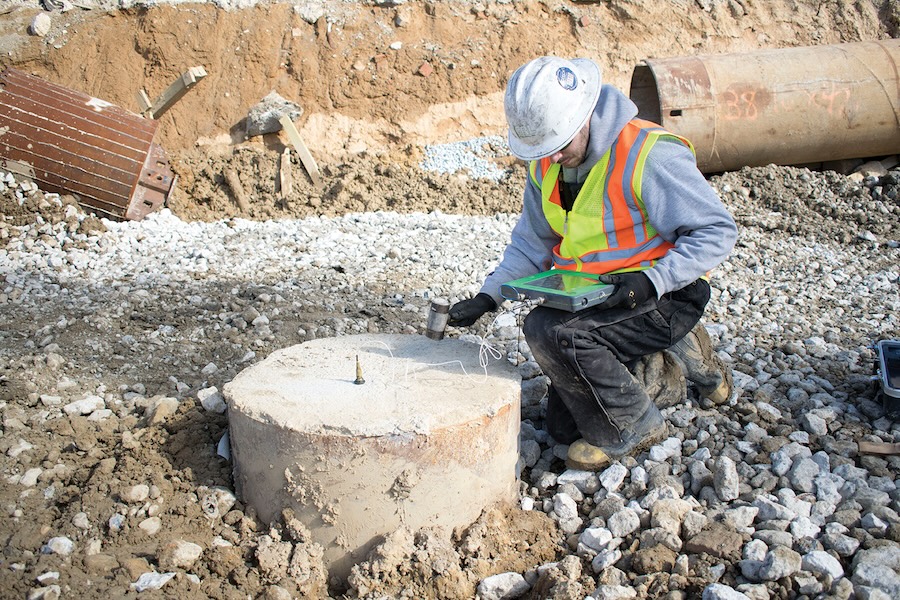
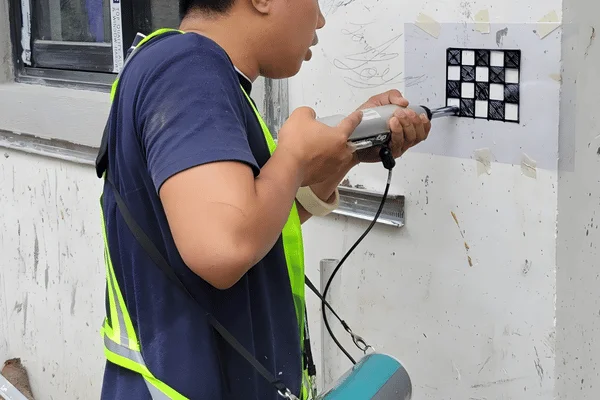
Next, the spring-loaded steel hammer is positioned perpendicular to the concrete surface. When triggered, the hammer strikes the surface, and the rebound distance is recorded. Several measurements are typically taken across the testing area to account for variations in concrete hardness. The results are then averaged and correlated to estimated compressive strength using established conversion charts or calibration curves.
Proper calibration of the Rebound Hammer Test equipment is crucial. Calibrated hammers provide reliable and consistent readings that can be compared with past results or industry standards. Testing personnel are trained to follow ASTM C805 procedures to minimize human error and improve measurement accuracy. Incorporating visual diagrams or photographs of the hammer placement and rebound reading can enhance understanding for project stakeholders.
Applications and Benefits
Rebound Hammer Test has diverse applications across construction and engineering projects. One of the primary uses is quality control for new concrete pours. By performing testing shortly after curing, project teams can confirm that the concrete meets design specifications and detect inconsistencies before construction progresses.
The Rebound Hammer Test is also widely applied to existing structures to monitor deterioration or identify areas that may require reinforcement. For example, bridges, highways, and commercial buildings benefit from periodic testing to ensure safety and compliance with local building codes. Rebound Hammer Test results can guide maintenance decisions, helping prioritize repairs based on structural condition.
Another significant benefit is its contribution to safe construction practices. Rebound Hammer Test can identify weak zones without the need for core sampling or drilling, reducing the risk of damaging critical structural components. This approach enhances both project efficiency and cost-effectiveness.
Rebound Hammer Test also complements other assessment methods such as Precision Rebar Scanning, which provides detailed information on reinforcement location and cover depth. Combining these services offers a more complete evaluation of concrete strength and overall structural integrity.
Rebound Hammer Test vs Other Concrete Testing Methods
While core sampling provides precise compressive strength measurements, it is destructive and time-consuming. Rebound Hammer Test offers a non-destructive alternative that can produce immediate results without compromising the structure. Although the method provides an estimated strength rather than exact values, it is highly effective for initial evaluation, quality control, and ongoing monitoring.
Other methods, such as ultrasonic pulse velocity testing, may provide complementary information but often require specialized equipment and interpretation. Rebound Hammer Test stands out for its simplicity, portability, and rapid results, making it ideal for field use. When combined with rebar scanning or other non-destructive evaluation techniques, it forms a reliable framework for assessing concrete health.
Why Choose Inch-On Materials Testing Laboratory
Inch-On Materials Testing Laboratory provides professional Rebound Hammer Test services with a focus on precision, compliance, and reliability. As a DPWH-BRS accredited facility, the laboratory follows international testing standards such as ASTM C805 and AASHTO procedures. Experienced technicians operate high-precision equipment to deliver accurate, consistent, and actionable results.
Inch-On offers a comprehensive approach by pairing Rebound Hammer Test with Precision Rebar Scanning. This combination allows engineers to assess both surface hardness and internal reinforcement, providing a clear understanding of concrete performance. Whether the goal is quality control, routine maintenance, or pre-renovation evaluation, Inch-On delivers professional, site-ready testing services across the Philippines.
Takeaway
Rebound Hammer Test provides a practical, efficient, and non-destructive way to evaluate concrete strength, surface hardness, and uniformity. Its applications span quality control, maintenance, rehabilitation, and structural assessment for both new and existing concrete elements. When performed by professional teams at Inch-On Materials Testing Laboratory, the test delivers reliable, actionable insights that help maintain safety, compliance, and long-term performance. Combining Rebound Hammer Test with Precision Rebar Scanning ensures a complete understanding of concrete conditions, supporting smarter construction decisions and minimizing risks. Contact Inch-On today to schedule a professional assessment and secure your concrete structures with accurate, non-destructive evaluation.
Frequently Asked Questions (FAQs)
What types of concrete structures can be tested using Rebound Hammer Test?
Rebound Hammer Test is suitable for beams, columns, slabs, walls, pavements, and other reinforced or non-reinforced concrete elements. It is particularly useful for in-place structures where coring or destructive testing is impractical.
How accurate is Rebound Hammer Test compared to core testing?
Rebound Hammer Test provides an estimated compressive strength based on surface hardness. While it is less precise than core testing, it is reliable for identifying weak areas, monitoring deterioration, and conducting quality control. Results can be calibrated with occasional core tests for verification.
Can Rebound Hammer Test detect internal reinforcement issues?
Rebound Hammer Test primarily assesses surface hardness. For detailed information on internal reinforcement, it should be used alongside Precision Rebar Scanning or similar non-destructive evaluation methods.
How often should concrete be tested with Rebound Hammer Test?
Frequency depends on project requirements and structural conditions. For new pours, testing is recommended after initial curing. Existing structures may benefit from periodic assessment to monitor wear, deterioration, or structural changes over time.
Is Rebound Hammer Test suitable for both new and aging concrete?
Yes, Rebound Hammer Test is effective for newly poured concrete as a quality control measure and for older structures to monitor surface degradation or prepare for rehabilitation.
Does the test damage the concrete surface?
No, Rebound Hammer Test is entirely non-destructive. The spring-loaded hammer makes minimal impact, allowing multiple measurements without compromising structural integrity.